The Medicaid Literacy Imperative: Why We Must Prioritize Understanding Now
As an advocate and observer in the healthcare space, I believe we are facing a silent crisis: the intersection of new federal Medicaid work requirements and a nationwide deficiency in health insurance literacy. The impending rules, set to begin as early as January 2027, pose a unique threat. The danger isn't that people are ineligible — it's that eligible people will lose vital health coverage because the system is too confusing to navigate.
This is more than a policy problem; it's a health literacy problem. To succeed, we must reframe this challenge as an opportunity to build robust systems that empower the individual.
The Root Problem: Complexity Overwhelms Eligibility
Health insurance literacy—the ability to find, understand, and use health insurance information—is low across the U.S. Now, we're asking Medicaid beneficiaries to comply with a system that demands monthly verification of at least 80 hours of work, volunteering, or school.
In my view, this combination of administrative complexity and low literacy is the true coverage killer:
The Literacy Gap: Studies show that nearly nine out of 10 adults in the U.S. struggle with health literacy (9). If people have difficulty choosing insurance plans during simpler life events, imagine the difficulty with monthly work verification and understanding complex exemption categories.
The Resignation Effect: I've seen firsthand how confusion, misinformation, and the sheer frustration of dealing with the system lead to resignation. This panic, fueled by misinformation, leads to people simply giving up. This is the silent crisis: eligible people surrendering because the system is too difficult.
The Arkansas Reality Check: The 2018 Arkansas implementation proved the stakes are high: 18,000 people lost coverage (8), many of whom were working but couldn't complete the verification process.
Opportunity at the Individual Level: Empowering the Beneficiary
The most powerful opportunity lies in empowering the individual with clear, tailored information. We must focus on making the complexity manageable.
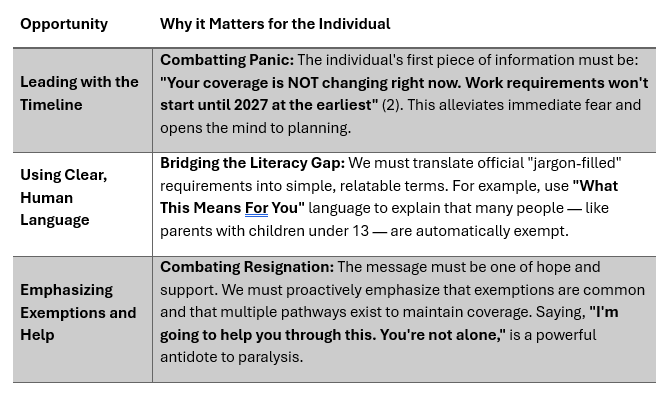
Table 1. Individual Level Opportunities for Education That Supports Access
Opportunity at the Organizational Level: Building Resilient Systems
No organization can do this alone. Success requires unprecedented coordination and investment in infrastructure between various benefit and employment systems between and across organizations, starting now.
1. Build Your Infrastructure and Data Systems
The Opportunity: Don't wait for final federal guidance (expected June 2026) (20). Use this time to build the systems needed for long-term engagement.
Action: Begin baseline data collection to understand each beneficiary's current work status, potential exemptions, and, crucially, their preferred communication methods. Develop databases to track outreach and create automated reminder systems for verification deadlines.
2. Deploy Trusted, Layered Communication
The Opportunity: Official state communications are often dismissed as "junk mail" and are ineffective when delivered in complex language. We must meet people where they are.
Action: Use a multi-modal strategy—text message reminders, direct mail with visual guides, and in-person assistance. More importantly, deploy trusted messengers like healthcare providers, community health workers, and peers who have successfully navigated the system. Repetition across channels fights confusion.
3. Invest in Tiered Community Organization Staff Literacy Training
The Opportunity: We cannot ask frontline community-based staff to "just fit this in" on top of their regular duties. They are key communicators but must be supported to prevent inconsistent information and moral distress.
Action: Implement a Three-Level Training Framework:
Level 1 (Recognize): Train all frontline staff to identify "red flag phrases" and refer the patient immediately.
Level 2 (Respond): Train care coordinators to use the Plain-Language Explanation Framework to discuss eligibility, exemptions and documentation options.
Level 3 (Resolve): Designate benefits specialists for complex appeals and problem-solving.
A Call to Action for 2026
The communities that will succeed are those that embrace preparation as an ongoing process, not an event. We must start early, prioritize literacy, and provide hands-on assistance. We have over a year to prepare for the earliest implementation. Let's use this time to build stronger, more empathetic systems that ensure every eligible person can maintain their essential health coverage.
References
Congressional Budget Office (CBO) Projections. Data related to the $\$326$ billion in federal savings over ten years and projections of millions becoming uninsured (4).
Implementation Timeline. Federal information noting the earliest start date for work requirements as January 1, 2027 (2, 22).
CMS Guidance Timeline. Information regarding the expected release of final federal implementation guidance in June 2026 (20).
Work Requirement Details. Specification of the 80 hours per month work/volunteer/school mandate and the monthly verification requirement (25).
US Health Literacy Statistics. National data indicating that nearly nine out of 10 adults in the United States struggle with health literacy (9).
Impact of Low Literacy on Choice. Research indicating that individuals with lower health insurance literacy have greater difficulty choosing appropriate insurance plans (14).
Arkansas Implementation Study. Data related to the 2018 Arkansas work requirement implementation, resulting in 18,000 people losing coverage (8).